Checklist · 17-page PDF · Free
The Grocery Shopping List for One Person That Doesn't Waste Food
Build a grocery shopping list for one person that cuts waste and cost: portion sizes, budget tiers and a printable checklist by category. Download free.
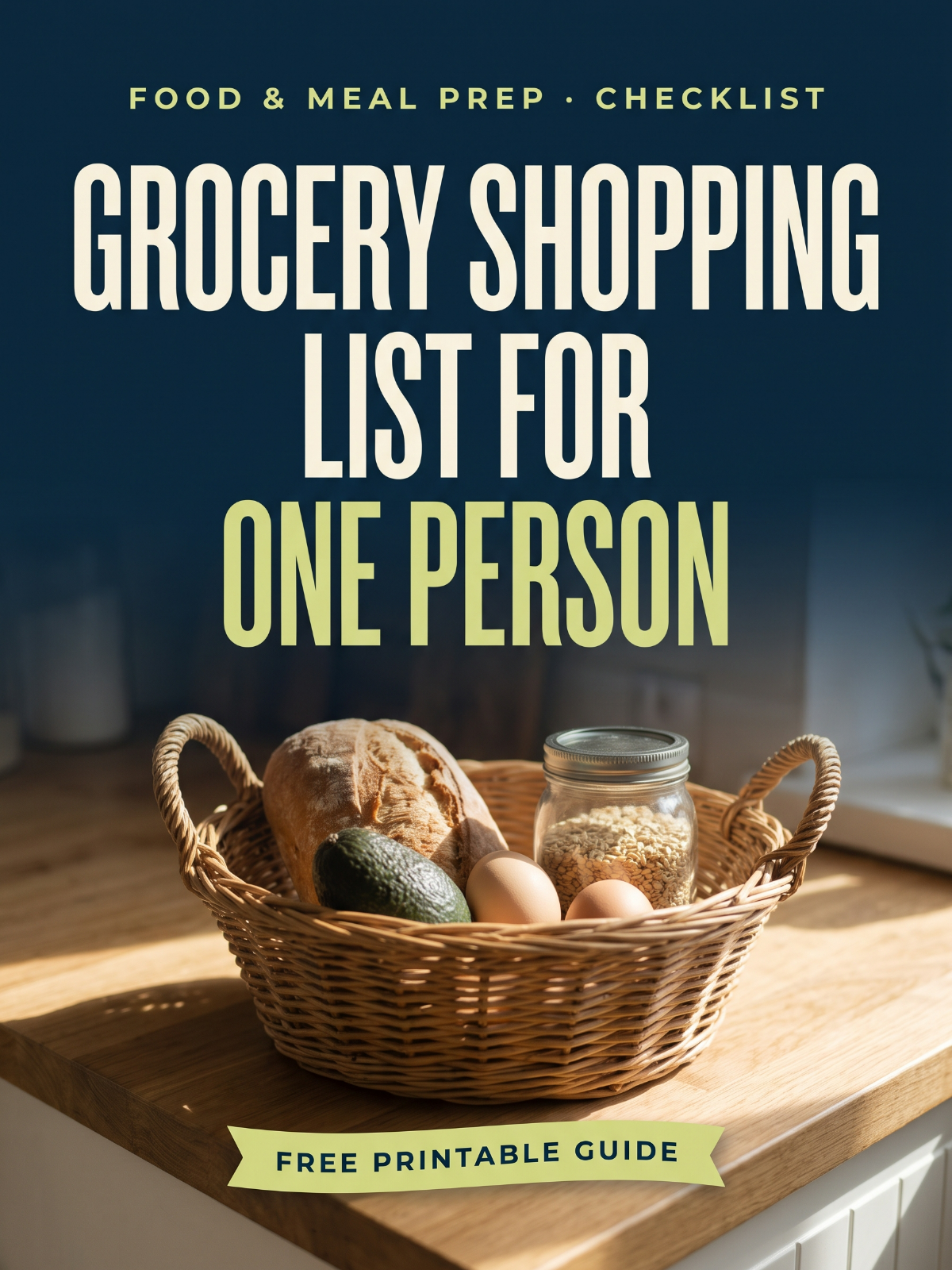
The full guide as a PDF
- ✓Weekly vs monthly quantity tables (exact grams, packs and portions for one)
- ✓Three budget tiers with per-week spending benchmarks and swap lists
- ✓Freeze-portion-preserve steps for family-size meat, bread and produce
- ✓One Shop, Six Meals planner: a single ingredient base mapped to six dinners
- ✓Printable aisle checklist sorted by category with quantity boxes to tick
- ✓5-step first-week start plan for cooking solo after a life change
Hosted on FileJoker. Free download, no sign-up.
A look inside the PDF
8 sections · 17 pages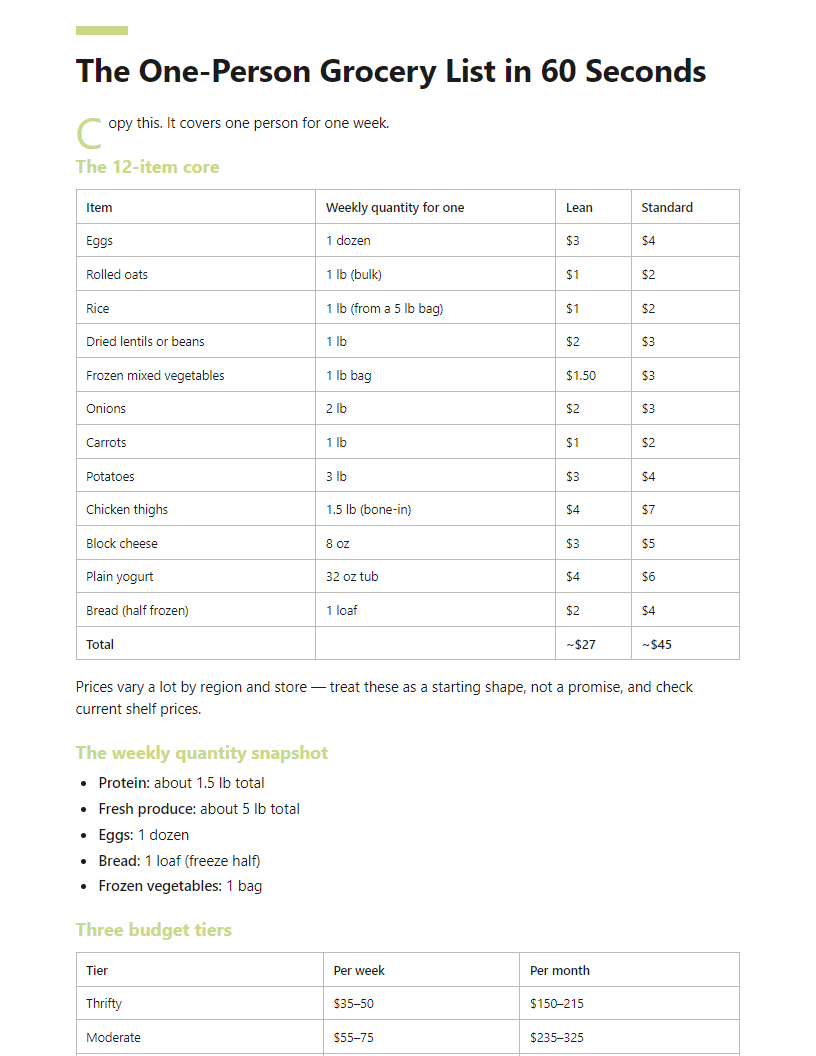
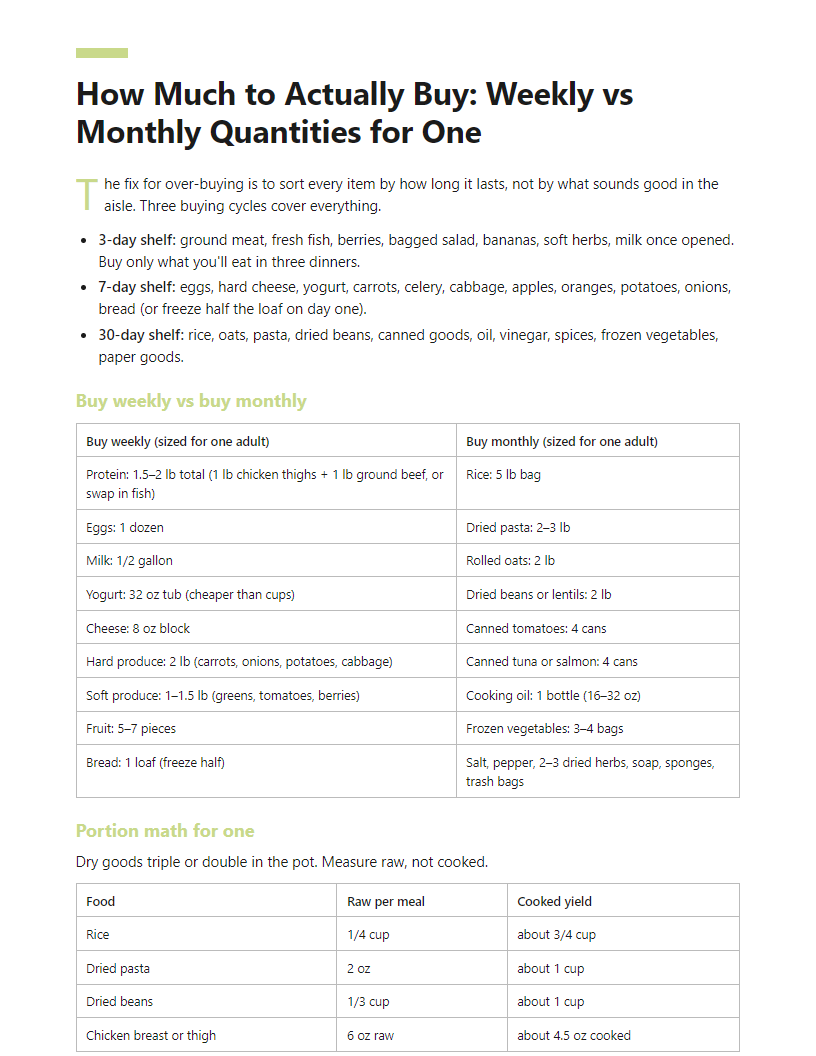
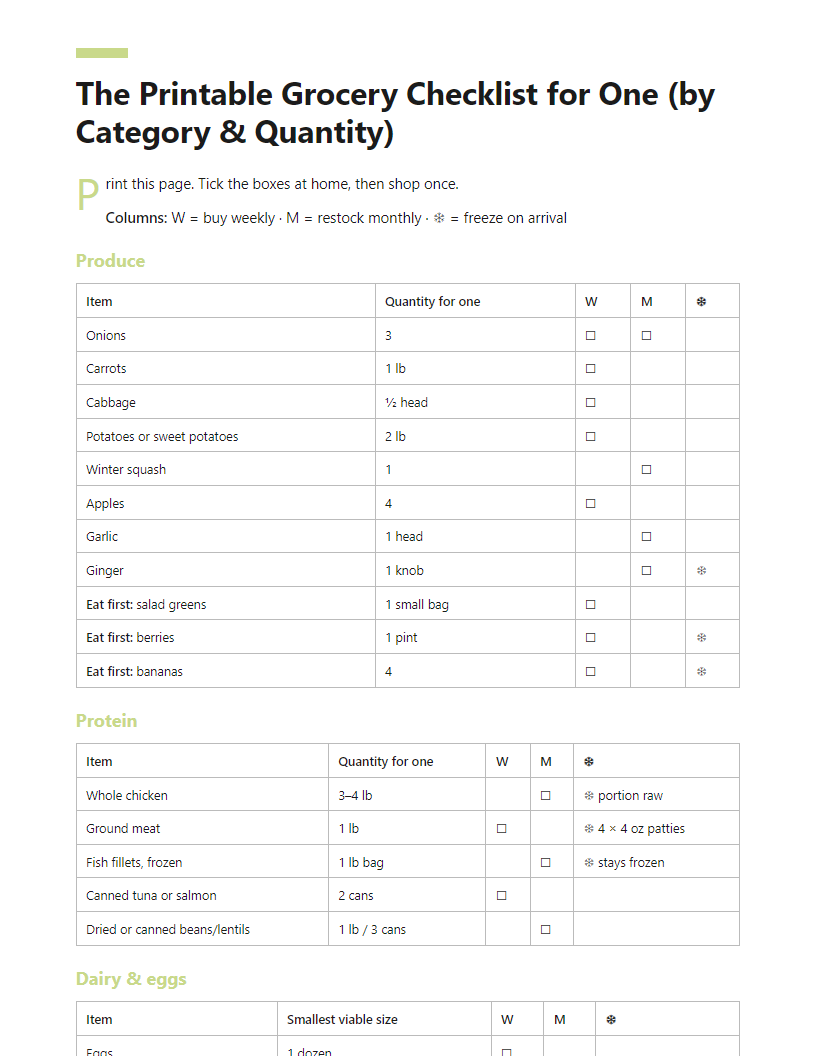
Full table of contents
- The One-Person Grocery List in 60 Seconds
- How Much to Actually Buy: Weekly vs Monthly Quantities for One
- Three Budget Tiers: What One Person Should Spend per Week
- Beating Family-Size Packaging: Freeze, Portion, Preserve
- One Shop, Six Meals: Stretching Ingredients Without Eating the Same Thing
- Seven Mistakes That Make Solo Grocery Shopping Expensive
- The Printable Grocery Checklist for One (by Category & Quantity)
- Your First Week: A 5-Step Start Plan
In this article
You open the fridge and throw out half a bag of spinach, a soured carton of milk and chicken you meant to cook four days ago. Shopping for one shouldn’t mean paying family prices to feed a bin. This page gives you a grocery shopping list for one person you can copy straight onto your phone: staples by category, realistic weekly quantities, and the seven habits that quietly inflate a solo food bill. You’ll also see how to restart cooking for yourself after a divorce, an empty nest or a first move out. The free PDF goes further with monthly quantity tables, three budget tiers, freezer-portioning steps and a printable checklist you can tick in the aisle.
The short answer
A working grocery shopping list for one person covers six blocks each week:
- Protein (3–4 portions): eggs, a small pack of chicken, tinned fish, beans.
- Produce (5 veg, 3 fruit): half fresh, half frozen so nothing rots.
- Carbs/grains: rice, oats, pasta, one loaf (freeze half).
- Dairy or alternatives: small milk, yoghurt, one block of cheese.
- Flavour builders: onions, garlic, stock, oil, two sauces.
- One treat plus one backup meal for a no-cook night.
Buy fresh for 3 days, frozen for the rest.
Why Shopping for One Is Harder Than It Looks
Cooking for one isn’t a smaller version of cooking for four. It’s a different problem, and three things about it are structural — not a willpower failure on your part.
The packaging mismatch. Grocery stores price and portion for a household of four. Ground beef comes in a 1 lb tray. Bread comes as 20 slices. Spinach comes in a 5 oz clamshell, milk in a half gallon, chicken in a family pack. Buy the “value” size and you pay less per ounce — but only if you eat all of it. One person rarely does.
The spoilage tax. The gap between what you buy and what you eat gets thrown out. For solo shoppers it’s almost always the same three categories: fresh produce that wilts, dairy that turns, and bread that molds by day five. That waste is a real line item in your budget, even though it never shows up on a receipt.
The overwhelm after a change. If you just went from cooking for six to cooking for one — after a divorce, an empty nest, a move, or your first apartment at 21 — the hard part isn’t technique. It’s that every quantity you know is now wrong. The fix is a system you reuse each week, not more motivation.
This guide is built in that order. First, how much to actually buy for one person. Then three weekly budget tiers in dollars. Then freezer tactics for family-size packs, meal-stretching, and a printable checklist by category and quantity.
It’s written for students, first-time renters, seniors living alone, and anyone newly single and finding their feet in the kitchen.
The One-Person Grocery List in 60 Seconds
Copy this. It covers one person for one week.
The 12-item core
| Item | Weekly quantity for one | Lean | Standard |
|---|---|---|---|
| Eggs | 1 dozen | $3 | $4 |
| Rolled oats | 1 lb (bulk) | $1 | $2 |
| Rice | 1 lb (from a 5 lb bag) | $1 | $2 |
| Dried lentils or beans | 1 lb | $2 | $3 |
| Frozen mixed vegetables | 1 lb bag | $1.50 | $3 |
| Onions | 2 lb | $2 | $3 |
| Carrots | 1 lb | $1 | $2 |
| Potatoes | 3 lb | $3 | $4 |
| Chicken thighs | 1.5 lb (bone-in) | $4 | $7 |
| Block cheese | 8 oz | $3 | $5 |
| Plain yogurt | 32 oz tub | $4 | $6 |
| Bread (half frozen) | 1 loaf | $2 | $4 |
| Total | ~$27 | ~$45 |
Prices vary a lot by region and store — treat these as a starting shape, not a promise, and check current shelf prices.
The weekly quantity snapshot
- Protein: about 1.5 lb total
- Fresh produce: about 5 lb total
- Eggs: 1 dozen
- Bread: 1 loaf (freeze half)
- Frozen vegetables: 1 bag
Three budget tiers
| Tier | Per week | Per month |
|---|---|---|
| Thrifty | $35–50 | $150–215 |
| Moderate | $55–75 | $235–325 |
| Comfortable | $80–110 | $345–475 |
The 12-item core runs about $27 lean, below the bottom of the Thrifty range. The tier figures also cover coffee, condiments, spices, and household restocks the core list leaves out.
Thrifty means beans, rice, and frozen produce carry the week. Comfortable adds fish, fresh berries, and some ready-made items.
The 5-4-3-2-1 rule, sized for one
The original rule is family-sized: 5 vegetables, 4 fruits, 3 proteins, 2 sauces, 1 treat. For one person, halve it — 3 vegetables, 2 fruits, 2 proteins, 1 sauce or dairy item, 1 treat. That’s a balanced cart without a meal plan, and without three bell peppers going soft in the drawer.
The one habit that matters most
Buy perishables for 3 days and shelf-stable goods for 3 weeks.
Fresh spinach, berries, and fish get used inside 72 hours or they rot. Rice, oats, canned tomatoes, and frozen vegetables can sit for a month. Shopping on two clocks instead of one stops the Sunday haul from turning into Thursday’s trash.
Seven Mistakes That Make Solo Grocery Shopping Expensive
1. Shopping before you look
One line: do the 60-second audit box in the printable checklist (s8) at the fridge door — it’s what stops the third jar of mustard and the second trip back.
2. Buying seven days of fresh produce
Three days fresh, four days frozen or hard produce. See the buying cycles in s3.
3. Calling a family-size pack a deal before you’ve planned it
Cheaper per pound only counts if all of it gets eaten — run it through the bulk rules in s4 first.
4. Single-use ingredients
This is the quiet budget killer for one person. A $6 specialty sauce for one recipe. A jar of a spice the blog insisted on. A bunch of fresh cilantro when the dish needs two sprigs. Each one feels small, and three of them is a tenth of a Thrifty week.
Ask one question at the shelf: will I use this again within two weeks? If no, substitute. Dried herbs cover most fresh-herb calls. If you do buy the bunch, chop the rest into an ice tray with oil and freeze it the same night.
5. Eight ambitious recipes
Planning seven or eight different cooked dinners sounds efficient. By Wednesday you’re tired, you order takeout, and Sunday’s produce rots in the drawer. You paid twice.
Plan four cooked meals a week. Leave three nights for leftovers, eggs on toast, or a bowl of whatever’s open. Four is a number you’ll actually hit, and it matches the protein and produce quantities in this guide.
6. Freezing with no plan to thaw
Portions you never remember are slower waste. Move tomorrow’s bag to the fridge every night — attach it to locking the door (s5).
7. Cooking family-size out of habit
Tip: After a divorce or an empty nest, your hands still measure for four. Halve the recipe on paper before you start, or cook the full batch deliberately and freeze three portions the same day. Don’t leave the extra in the fridge hoping — that’s the part that gets thrown out.
Cooking for One After a Life Change: A Gentler Restart
If you cooked for a family for 20 years, or never cooked at all, the hard part isn’t the budget. It’s standing in a kitchen built for more people than are in it.
Don’t halve the family recipe
Halved recipes fail on the math. One egg won’t split. A quarter onion dries out. Pan sizes don’t shrink, so things scorch or steam.
Cook the full recipe instead and treat the extra as planned meals. Chili, stew, soup, baked pasta, rice bowls — all four portions, eaten across two days and frozen for two more.
Three meals, not a meal plan
Skip the seven-day grid. Pick three meals you can cook without reading anything: eggs and toast, a one-pot soup, a rice or pasta bowl. Buy for those three only. Add a fourth when the first three feel automatic.
Convenience is allowed
Pre-chopped onions, bagged salad, frozen vegetables, a rotisserie chicken. These cost more per pound and waste less, which usually evens out for one person. A $7 rotisserie chicken gives you dinner, two sandwich lunches, and bones for stock.
Make it feel like a meal
Use a plate, not the container. Sit down. Batch-cook as a favor to your future self — label the freezer bags with the date and the meal name, so Wednesday-you opens the freezer and finds a gift, not a mystery.
Two weeks to ease in
| Week | Do this |
|---|---|
| 1 | Buy the 12-item core. Cook your three meals, repeated. Freeze any extra. |
| 2 | Keep the three. Add one new meal and one rotisserie chicken. Make stock from the bones. |
Questions Single Shoppers Ask Most
What is a basic grocery list for a single person?
Twelve items cover you: eggs, rolled oats, rice or pasta, canned beans, frozen vegetables, a block of cheese, milk or a shelf-stable alternative, onions, carrots, potatoes or sweet potatoes, apples or another sturdy fruit, and one protein (whole chicken or ground meat). Three optional add-ons make it taste like food instead of fuel: olive oil, a jar of tomato sauce, and one acid — lemons, vinegar, or hot sauce.
What is the 5-4-3-2-1 rule for shopping?
It’s a list-building shortcut: 5 vegetables, 4 fruits, 3 proteins, 2 sauces or condiments, 1 treat. For one person, halve the counts and the quantities — 3 vegetables, 2 fruits, 2 proteins, 1 sauce, 1 treat. You’ll still have variety without three bell peppers turning soft in the drawer.
What should I include, category by category?
| Category | Minimum for one week |
|---|---|
| Produce | 3 vegetables, 2 fruits, onions + garlic |
| Protein | 1 dozen eggs, 1 main protein (1.5–2 lb) |
| Dairy | 1 block cheese, ½ gallon milk or 1 qt |
| Grains | 1 lb oats or rice, 1 box pasta |
| Pantry | 2 cans beans, 2 cans tomatoes, oil |
| Frozen | 1–2 bags vegetables |
What should a single person spend on groceries?
Thrifty runs $35–50 a week ($150–215 a month). Moderate is $55–75 ($240–325). Comfortable is $80–110 ($345–475). Pick a tier and write the number on your list before you leave the house.
How often should I shop living alone?
Once a month for shelf-stable and freezer items, plus one 10-minute produce run each week. More trips means more impulse buys; fewer means wilted lettuce. The monthly shop is also where bulk pricing pays off — a big bag of onions or a BOGO meat deal only works if you portion and freeze it the same day.
Can I really freeze milk, cheese and eggs?
Yes, with caveats.
- Milk: freezes fine. Pour off an inch first so it can expand. Shake hard after thawing — it separates.
- Cheese: hard blocks freeze well but turn crumbly. Use them for cooking and melting, not a cheese board. Shred before freezing.
- Eggs: not in the shell. Crack, beat lightly, and freeze in an ice cube tray — two cubes equals one egg.
- ✓Weekly vs monthly quantity tables (exact grams, packs and portions for one)
- ✓Three budget tiers with per-week spending benchmarks and swap lists
- ✓Freeze-portion-preserve steps for family-size meat, bread and produce
- ✓One Shop, Six Meals planner: a single ingredient base mapped to six dinners
- ✓Printable aisle checklist sorted by category with quantity boxes to tick
- ✓5-step first-week start plan for cooking solo after a life change
Frequently asked questions
What does a basic grocery list for a single person look like?
Keep it to about 20 items: eggs, one small pack of chicken or fish, tinned beans or tuna, rice or pasta, oats, bread (freeze half), onions, garlic, carrots, a leafy green, two fruits, a bag of frozen vegetables, yoghurt, cheese, milk in the smallest size, oil, stock cubes, two sauces and one treat. That covers roughly 14 meals.
What is the 5-4-3-2-1 rule for grocery shopping?
It's a simple cart formula: 5 vegetables, 4 fruits, 3 proteins, 2 sauces or flavour items, and 1 treat. For one person, halve the quantities rather than the categories — five different vegetables in small amounts, not five full bags. It stops you buying ten versions of the same thing and guarantees variety without a written meal plan.
What should one person spend on groceries per week?
In the US, a single adult typically spends $55–$75 a week on a thrifty budget, $85–$110 moderate, and $120+ liberal. In the UK, roughly £30–£50 a week. Track four weeks before judging your number: solo shoppers often overspend on convenience packs and duplicate condiments rather than on actual food volume.
How do I stop fresh food spoiling before I eat it?
Split your shop by shelf life. Buy fresh produce and dairy for the first three days only, then rely on frozen vegetables, tinned fish, eggs and root vegetables for days four to seven. Freeze bread, cheese and herbs on day one. Store salad leaves with a paper towel, and keep one "eat me first" shelf at eye level.
How do I handle family-size packs when I only cook for myself?
Portion before you store. Divide meat into single servings, flatten in freezer bags, label with the date, and freeze within 24 hours. Pre-chop bulk onions and peppers onto a tray, freeze loose, then bag. For bread and cheese, freeze in slices so you take only what you need. Bulk is still cheaper per unit — only if it's portioned the day you buy it.
How can I turn one shop into several different meals?
Cook one base ingredient, then change the flavour, not the protein. Roast a tray of chicken and vegetables: night one as a plate, night two in a wrap with yoghurt sauce, night three shredded into fried rice, night four simmered into soup with stock and beans. Rotating spice, sauce and carbohydrate makes the same shop taste like four meals.
We collected 153 real questions and comments about "grocery shopping list for one person" (112 from YouTube comments, 4 from People Also Ask, 37 from search suggestions), grouped them into 12 recurring problems, and built this guide to resolve the 6 that block people most. The top-ranking pages were reviewed for gaps; 7 of those gaps became dedicated sections.
Edited by Alex Horn · Last updated November 9, 2026 · How we make our guides
More in Food & Meal Prep
 premium+2 bonuses
 free
 premium+2 bonuses
 premium+2 bonuses